


Household over-indebtedness
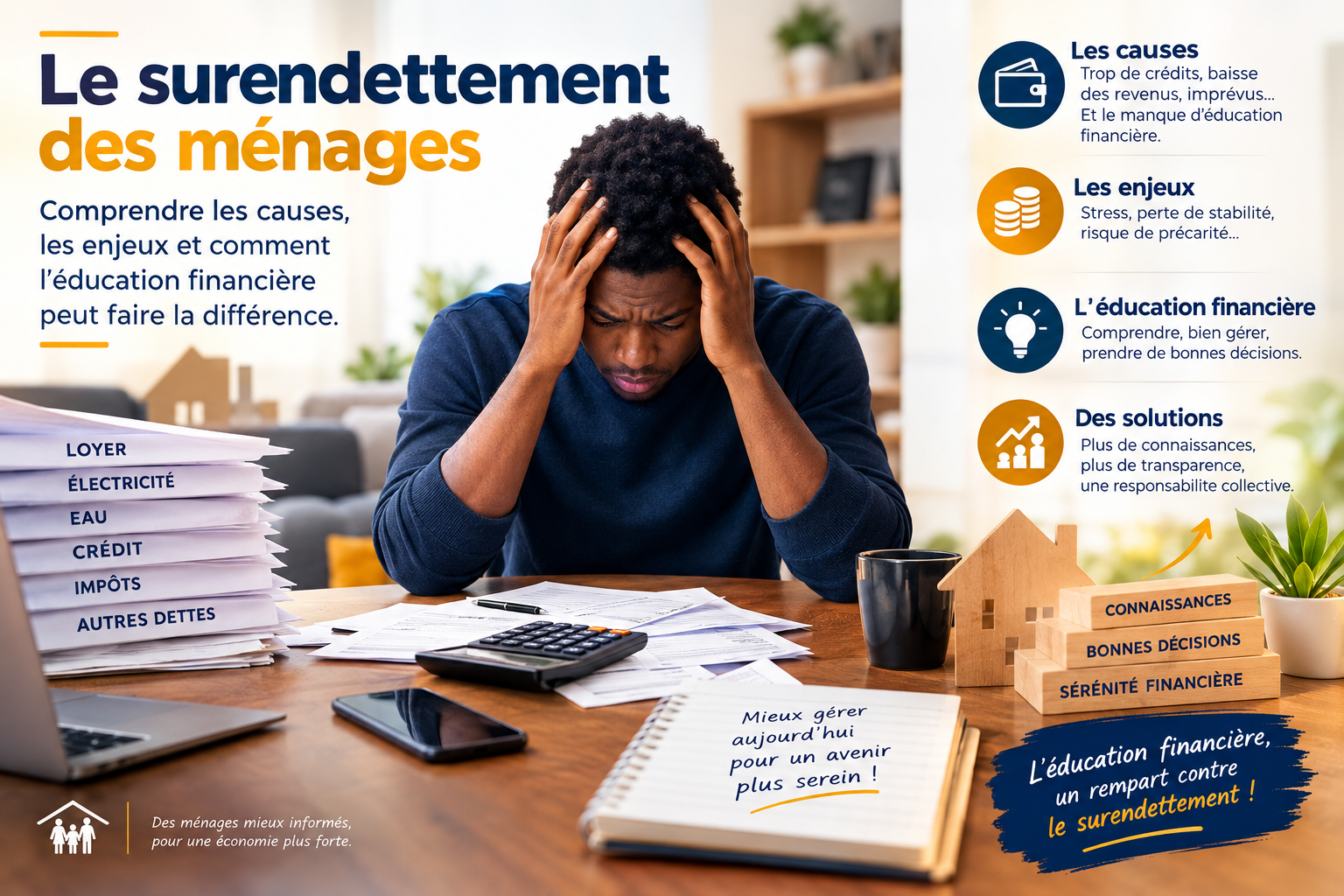
Over-indebtedness: definition and issues
Over-indebtedness can be defined as a situation in which natural persons find themselves, characterised by the manifest impossibility for the debtor, even if acting in good faith, to meet all of their non-professional debts, both due and falling due. The problem of over-indebtedness can be raised both on a personal and family level, that is to say households that contract debts for the acquisition of an asset in the short or long term. Household over-indebtedness, a common phenomenon nowadays, is the theme that will be the subject of this article.
The causes of over-indebtedness
You are in a situation of over-indebtedness when you are no longer able to repay your monthly credit payments or to meet your due debts. Your over-indebtedness situation can have different origins, such as: too many credits, a lasting and persistent drop in your resources or temporary difficulties (job loss, separation or illness…). These causes of over-indebtedness are certainly direct and tangible, but do we ever seek to understand their rationale? That is to say, do we ever ask ourselves for a moment what the real cause could be, which makes us make financial decisions (credit and others…) without prior analysis? Certainly not. Well, there is another cause that could justify the frequency of the phenomenon of household over-indebtedness. An indirect cause that no one mentions and which is nevertheless obvious: the lack of financial education of households.
What is financial education?
What is financial education?
Indeed, financial education is the teaching of the knowledge, skills and attitudes that people must adopt to better manage expenses, savings and credit in a rational manner. Furthermore, it is also the fact of leading individuals to hold basic knowledge and minimal skills in money management, banking, finance, economics, credit…
Specialists agree and reveal that financial education is an individual's ability: (a) to understand concepts relating to money management; (b) to have practical knowledge of financial institutions, systems, services and financial products; and (c) to possess a set of cognitive and analytical skills in personal finance matters.
Financial education as a solution to over-indebtedness
The above definitions conceive financial education as a specific lesson enabling households and individuals to deal with financial issues. It thus offers households the ability to understand and make use of financial concepts. It also teaches households how to make good financial decisions to improve their well-being and avoid financial distress.
The three arguments in favour of financial education
The importance given to financial education is dictated by three arguments that are more or less complementary:
- First, finance has become an integral part of household life. Thus, the lack of financial education appears as a serious handicap in the private and social life of households. Indeed, households would have difficulty living decently and leading a peaceful life if they have not previously benefited from a financial education programme. The underlying argument is linked to the fact that households that have not benefited from financial education are more exposed to over-indebtedness, bankruptcy and even socioeconomic marginalisation (Lucey and Cooter, 2008; OECD, 2005).
- Secondly, financial education is likely to have a positive impact on the social and economic well-being of households. Indeed, households that benefit from financial education are likely to make good financial decisions for their families and thus increase their financial and economic security. Consequently, financially educated families would contribute to the advent of viable communities and overall economic development.
- Thirdly, the harmful effects resulting from the 2008 financial crisis have demonstrated that there was a cause-and-effect relationship between household access to financial products and services, financial markets and economic development. Consequently, financial education of households would allow them to choose suitable financial products and services and to make informed financial decisions, thus avoiding a new financial crisis for humanity (Jappelli, 2010; Gerardi and Meier, 2010).
Conclusion: a collective responsibility
The phenomenon of over-indebtedness faced by households should be analysed from the root cause, which is the lack of financial education, and we should therefore stop focusing solely on the "superficial" causes of this phenomenon. Adapted financial education and more transparency will greatly contribute to reducing the percentage of household over-indebtedness cases. It is the responsibility of all, including banks, to work on this new form of social and financial inclusion.



comment
No comments
Leave a comment